How Potatoes Grow
A potato is not a root — it is a swollen underground stem, a tuber, and the plant grows it as a food store for next year. Farmers do not plant potato seeds; they plant pieces of last year's potatoes. It is one of the easiest crops in the world to grow, and one of the most productive: no other staple gives so much food from so little land.
In short
Potatoes grow from "seed potatoes" — pieces of tuber with at least one "eye", or bud — planted in spring in loose, well-drained soil. The plant grows leafy stems above ground and tubers below; as the stems grow, farmers "hill up" soil around them to protect the tubers from light. Most varieties are ready to harvest 70 to 120 days after planting. Potatoes are a cool-season crop and stop growing well in hot weather.
From seed potato to plant
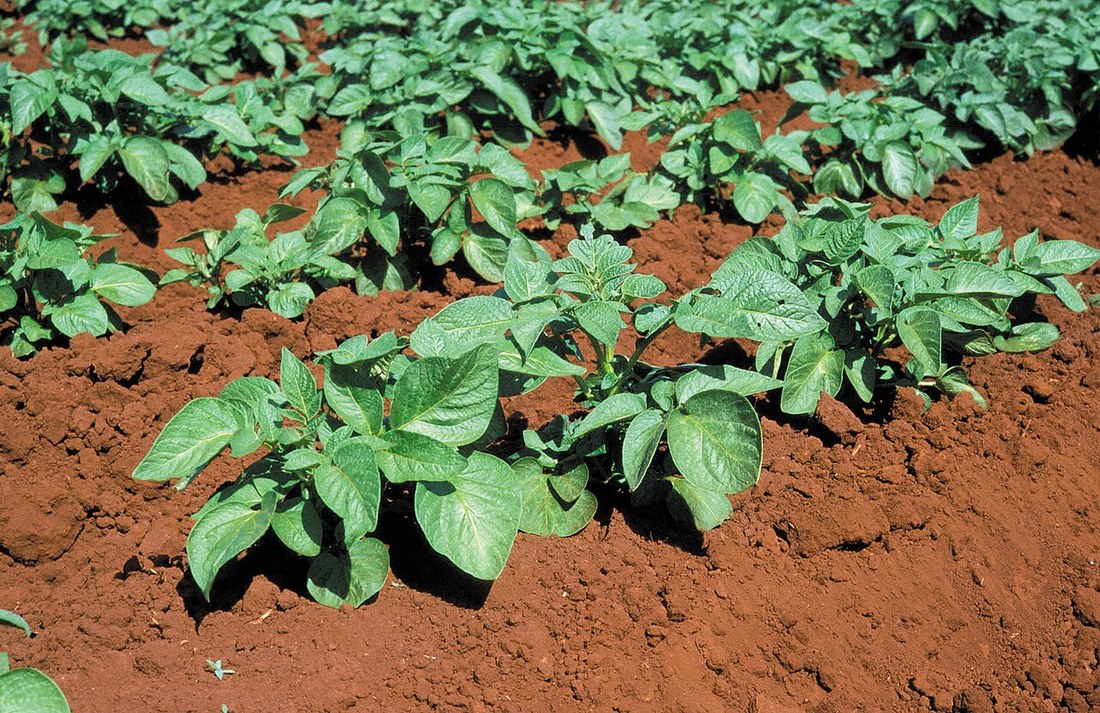
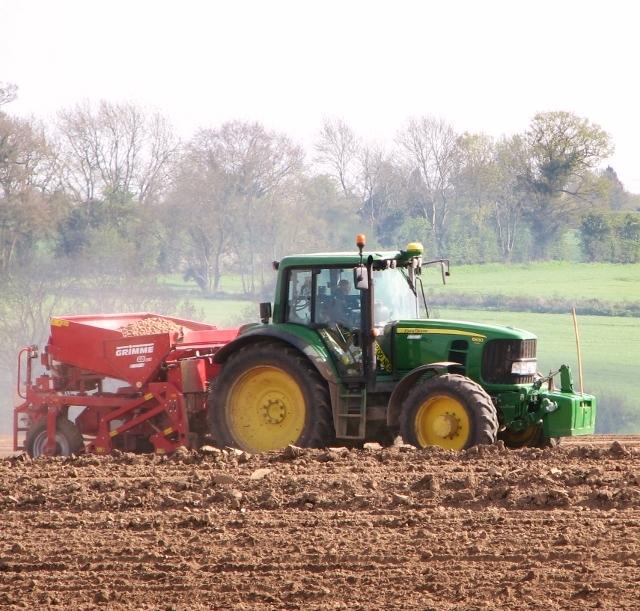
Potatoes are grown as an annual, though the plant is naturally a cool-season perennial. Planting starts in spring, once the soil has warmed: a seed potato is cut into pieces, each with at least one eye, and the pieces are buried about 10 centimetres deep in loose, well-drained soil. Each eye sprouts a stem, and the stems grow into a leafy plant about knee-high, with white or purple flowers — a reminder that the potato is a relative of the tomato.
Underground, the plant sends out stems called stolons, and the tips of the stolons swell into tubers. That is why gardeners "hill up" potatoes: as the stems grow, they pile soil around the base of the plant. The extra soil keeps the developing tubers in the dark — tubers exposed to light turn green and produce solanine, a bitter toxin — and gives the tubers room to swell.
Water, weather, and harvest
Potatoes need steady water while the tubers are forming, and they prefer cool weather: they grow best when days are around 15 to 20 °C and stop growing well in heat. That is why they do well in northern Europe, the Andes, and highland Asia, and why farmers in hot climates plant them in the cool season. Most varieties take 70 to 120 days from planting to harvest: early varieties are ready first, maincrop varieties later, and they store longer.
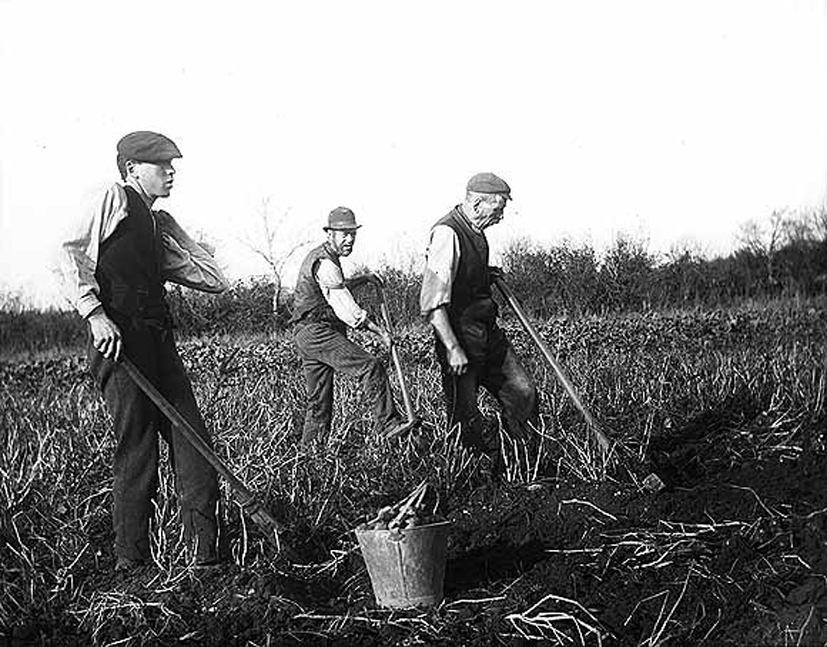
Harvest is a matter of digging carefully so as not to cut the tubers, then letting them dry for a few hours before storing them in a cool, dark, airy place. In those conditions, a good crop keeps for months — one reason the potato became the winter food of northern Europe. A hectare of potatoes can produce more food energy than a hectare of almost any other staple crop, which is why the potato feeds so many people on so little land.
The enemies: blight and beetles
The potato's worst enemy is still late blight, the same Phytophthora infestans that caused the Irish famine. It spreads in warm, wet weather and can destroy a crop in days; modern farmers fight it with resistant varieties, careful spacing, and fungicides, and they remove infected plants at once. The Colorado potato beetle, which arrived in Europe from North America in the 20th century, can strip a plant bare, and is fought with crop rotation and, where allowed, insecticides.
That is also why farmers do not plant potatoes in the same ground year after year: rotation breaks the cycle of soil diseases, including potato cyst nematodes, tiny worms that can live in the soil for years. A four-year gap between potato crops in the same bed is the standard advice for gardeners, and it is one of the oldest rules in potato farming.
Sources: Wikipedia, "History of the potato"; Potatopedia, "Potato Varieties: 50+ Types and Their Uses"; The History Trail, "Potato: From Andean Mountains to the Irish Famine" Checked 27 November 2026.